
Sexual thoughts can be a particularly distressing form of obsessive-compulsive disorder (OCD). Often referred to as Sexual OCD (S-OCD), this presentation involves intrusive, unwanted sexual thoughts, images, urges, feelings, or physical sensations that cause significant anxiety, shame, and doubt.
For people experiencing Sexual OCD, the content of their thoughts can feel deeply alarming. They may worry that having a particular thought, image, or physical sensation says something terrible about who they are or what they secretly want.
However, one of the most important things to understand about OCD is this: a thought is not the same thing as a desire, intention, identity, or action.
What Is Sexual OCD?
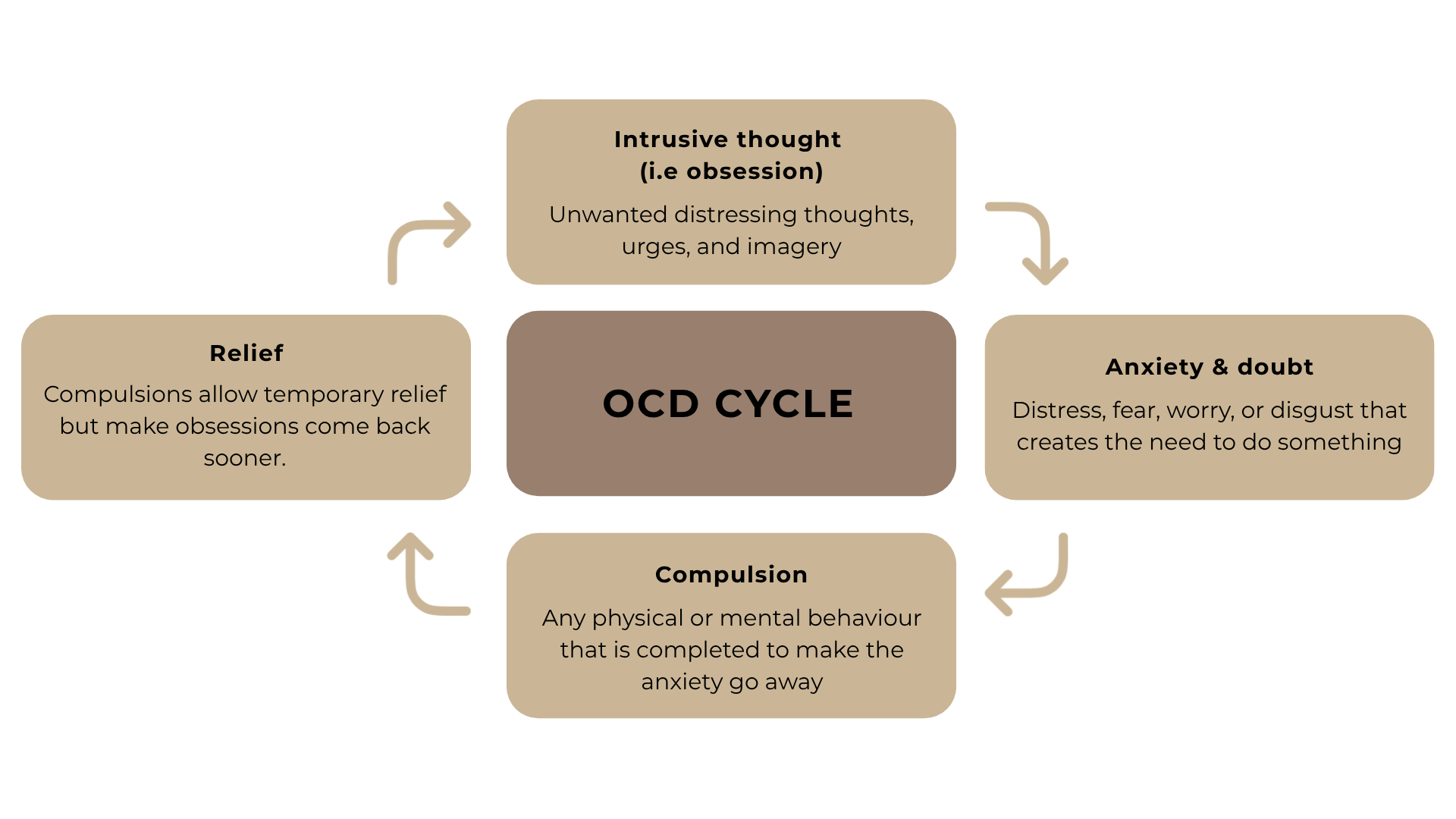
Sexual OCD involves obsessions related to sexual themes. Obsessions are intrusive and unwanted thoughts, images, urges, sensations, or doubts that repeatedly enter a person's mind and cause distress. These obsessions are typically ego-dystonic, meaning they feel inconsistent with the person's values, sense of self, beliefs, or genuine desires. Rather than being pleasurable or wanted, the thoughts often provoke fear, disgust, shame, guilt, or panic.
In response to the anxiety caused by these obsessions, a person may engage in compulsions. Compulsions are mental or behavioural attempts to gain certainty, reduce anxiety, prove something to oneself, or prevent a feared outcome. While compulsions may provide temporary relief, they ultimately reinforce the OCD cycle by teaching the brain that the intrusive thought or sensation was important and dangerous.
The cycle often looks something like this:
Common Sexual OCD Themes
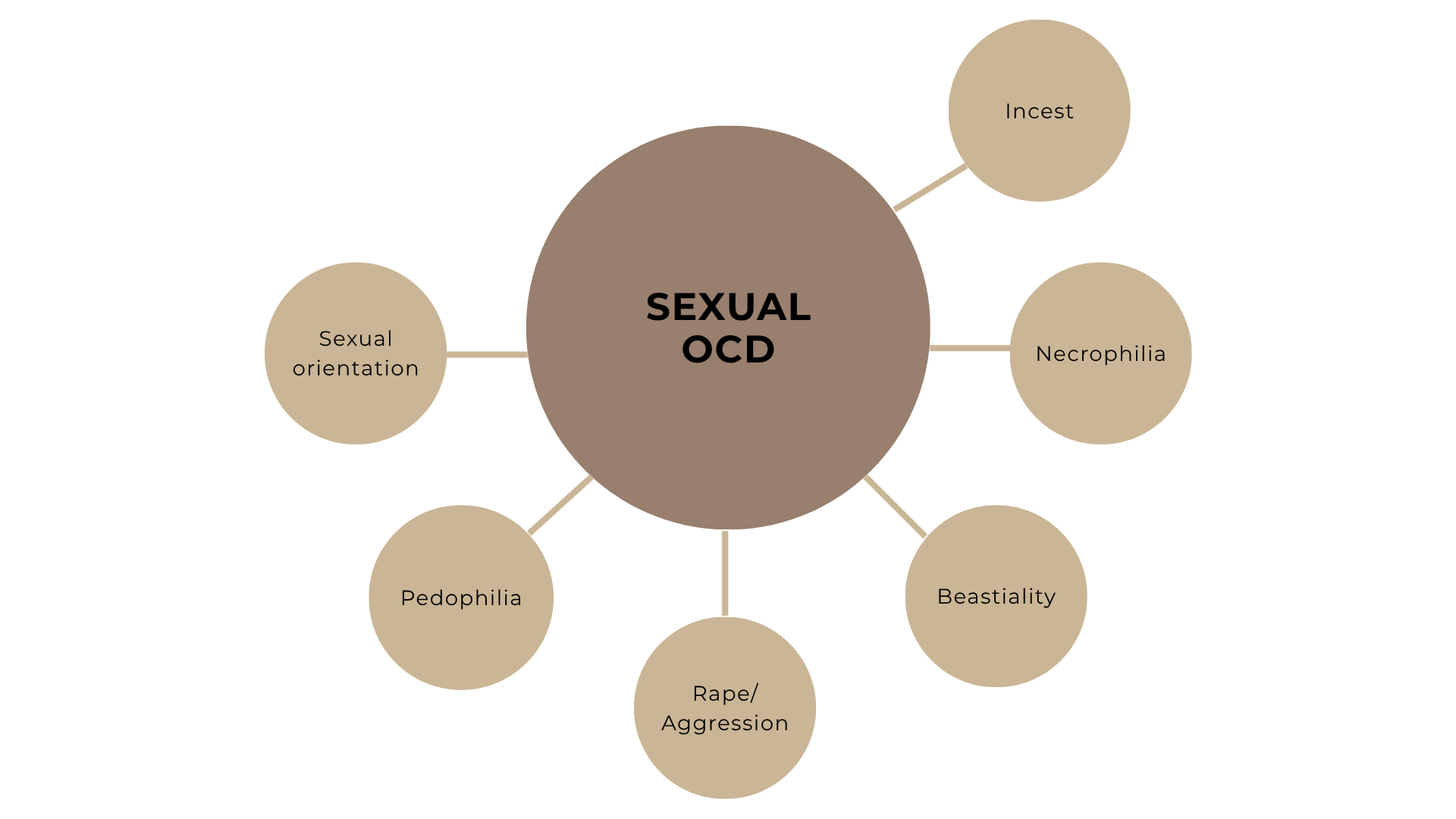
Sexual OCD can involve many different themes. The specific content varies from person to person, but the underlying pattern is often the same: an unwanted thought or sensation triggers doubt, and the person feels compelled to figure out what it "really means."
Sexual Orientation OCD
Sexual Orientation OCD may involve persistent doubt and anxiety about one's sexual orientation.
Example obsession:
"What if looking at that person means my sexual orientation has suddenly changed and I am actually attracted to them?"
Possible compulsions:
-
Checking for physical arousal around other people
-
Monitoring attraction or lack of attraction
-
Mentally reviewing past romantic or sexual experiences
-
Comparing reactions to different genders
-
Seeking reassurance about one's sexual orientation
-
Testing one's attraction through pornography, dating, or mental imagery
The problem is not the sexual orientation itself. Rather, OCD creates an intense and urgent demand for absolute certainty about identity and attraction.
Pedophilia-Themed OCD
Pedophilia-themed OCD, sometimes referred to as POCD, involves intrusive and unwanted thoughts, images, sensations, or fears related to children.
Example obsession:
An unwanted and distressing thought or mental image occurs around a child, followed by the fear: "What if this means I am dangerous to children?"
Possible compulsions:
-
Avoiding playgrounds, schools, or family gatherings
-
Avoiding being alone with children
-
Avoiding physical affection with children
-
Checking for bodily sensations
-
Mentally reviewing past interactions with children
-
Seeking reassurance that one is not dangerous
The intrusive content can be profoundly upsetting, particularly because it is often directly opposed to the person's values and sense of morality.
Incest OCD
Incest-themed OCD can involve intrusive thoughts, images, doubts, or fears about being sexually attracted to or behaving sexually toward a family member.
Example obsession:
"What if I am attracted to my sibling or parent?"
Possible compulsions:
-
Reviewing past interactions for evidence of inappropriate behaviour
-
Monitoring physical sensations around family members
-
Avoiding being alone with certain relatives
-
Replaying memories to determine what one "really felt"
-
Seeking reassurance that the thought does not mean anything
Sexual Aggression or Harm-Themed OCD
Some people experience intrusive fears related to acting sexually aggressive, violating consent, or behaving in ways that conflict with their values.
Example obsession:
Intrusive thoughts or mental images about behaving in a sexually aggressive or non-consensual way, followed by intense fear about what this might mean.
Possible compulsions:
-
Repeatedly confessing thoughts to a partner
-
Constantly apologizing
-
Avoiding intimacy or sexual activity
-
Reviewing past intimate experiences for perceived wrongdoing
-
Seeking reassurance that one has never acted inappropriately
Again, the central issue in OCD is often an inability to tolerate uncertainty and the urgent need to obtain proof that one is a good, safe, or moral person.
Bestiality- and Necrophilia-Themed OCD
Sexual OCD can also involve intrusive, shocking thoughts or mental images related to animals or deceased people.
Example obsession:
An unwanted mental image appears, followed by fears about what having the thought means about one's character or desires.
Possible compulsions:
-
Avoiding household pets or animals
-
Monitoring physical sensations when seeing an animal
-
Mentally checking whether the thought caused any reaction
-
Seeking reassurance
-
Trying to suppress or neutralize the intrusive thought
As with other forms of Sexual OCD, the content itself can become especially "sticky" because the person finds it shocking, unacceptable, or deeply inconsistent with their values.
What Are Groinal Responses in Sexual OCD?
One of the most confusing and distressing experiences for people with Sexual OCD is what is commonly called a groinal response.
A groinal response refers to an involuntary physical sensation or physiological response in the genital area. This can include sensations of tingling, sensitivity, swelling, or other forms of genital awareness. These sensations can occur automatically and may become more noticeable when someone is anxious and intensely monitoring their body.
For someone with Sexual OCD, an involuntary sensation may immediately trigger the thought:
"Why did my body react? Does this mean I wanted the thought? Does this prove that I am attracted to this?"
This interpretation can intensify anxiety and lead to even more checking.
Why Checking Makes Groinal Responses Worse
When you repeatedly scan your body for a sensation, your attention becomes increasingly focused on that area. Anxiety can also heighten physical awareness.
As a result, people may find themselves constantly asking:
-
"Did I feel something?"
-
"Was that arousal?"
-
"Did my body react differently this time?"
-
"What does that sensation mean?"
-
"Does this prove something about me?"
This repeated monitoring can become a compulsion. The more a person checks for certainty, the more aware of physical sensations they may become.
Importantly, a physical sensation by itself cannot reliably determine what someone wants, values, or intends. Bodies can respond automatically to a wide range of internal and external stimuli, and anxiety can further increase awareness of normal or involuntary sensations.
Sexual OCD and Thought-Action Fusion
People with Sexual OCD may also experience thought-action fusion—the belief that having a thought is morally equivalent to acting on it, or that thinking something increases the likelihood that it will happen.
For example, someone might think:
"If I had this thought, there must be a part of me that wants it."
Or:
"If my body reacted, that means I would act on it."
OCD often treats thoughts, feelings, sensations, desires, intentions, and actions as though they are all interchangeable. They are not.
Intrusive thoughts can occur without being meaningful, intentional, or reflective of a person's character.
The attempt to determine with 100% certainty what every thought or sensation means is often what keeps the OCD cycle going.
The Impact of Sexual OCD
Sexual OCD can have a significant impact on daily life and relationships. Because these obsessions are often associated with intense shame and fear of judgment, many people suffer in silence.
People may:
-
Withdraw from friends or family
-
Avoid children, pets, relatives, or romantic partners
-
Avoid dating or intimacy
-
Constantly monitor their thoughts and physical sensations
-
Seek repeated reassurance
-
Spend hours reviewing memories
-
Feel intense shame about thoughts they never wanted
-
Question their identity or morality
-
Avoid discussing their symptoms because they fear being misunderstood
This isolation can make OCD even more powerful. Many people delay seeking help because they worry that disclosing the content of their intrusive thoughts will cause others to misunderstand them.
A trained OCD therapist understands that the content of an obsession is not the same as an intention or desire. Treatment focuses on the OCD process and the patterns that maintain it.
How Is Sexual OCD Treated?
Sexual OCD is treatable.
One of the most well-established psychological treatments for OCD is Exposure and Response Prevention (ERP), a specialized form of cognitive behavioural therapy. ERP helps individuals gradually learn to face uncertainty and triggers without relying on compulsions to obtain immediate relief.
Treatment may involve learning to:
-
Identify obsessions and compulsions
-
Recognize mental compulsions, such as rumination and memory review
-
Reduce reassurance-seeking
-
Stop monitoring and checking bodily sensations
-
Learn to tolerate uncertainty
-
Respond differently to intrusive thoughts
-
Build confidence in one's ability to experience anxiety without compulsive behaviour
The goal is not to prove with absolute certainty that an intrusive thought means nothing. In fact, the pursuit of absolute certainty is often part of the problem.
Instead, treatment helps people develop a different relationship with uncertainty, intrusive thoughts, and uncomfortable sensations.
When to Seek Help for Sexual OCD
If intrusive sexual thoughts or fears are causing significant anxiety, avoidance, shame, compulsive checking, or interference in your relationships and daily life, it may be helpful to speak with a mental health professional who has specific training in OCD.
Sexual OCD can feel incredibly isolating, but you do not have to navigate it alone. Effective treatment is available, and recovery does not require you to figure out the meaning of every thought, image, or physical sensation.
Intrusive thoughts are a common. What matters clinically is not simply the content of a thought, but the distress, interpretation, compulsions, and patterns that follow it.
Looking for OCD Therapy?
We provide evidenced-based psychotherapy for individuals struggling with sexual OCD and other forms of obsessive-compulsive disorder, such as contamination OCD, symmetry/exactness OCD, and harm OCD.
If you are looking for support, working with a therapist who understands OCD, compulsions, reassurance-seeking, rumination, and Exposure and Response Prevention (ERP) can make an important difference.
References
Bruce, M., Wetterneck, C. T., & Williams, M. T. (2017). Pedophilia-themed OCD: Diagnosis & treatment [Educational guide].
Pinciotti, C. M., & Orcutt, H. K. (2021). Obsessive-compulsive symptoms in sexual minorities. Psychology of Sexual Orientation and Gender Diversity, 8(4), 487–495.
Pinto, A., Mancebo, M. C., Eisen, J. L., Pagano, M. E., & Rasmussen, S. A. (2007). The Unacceptable Thoughts factor in obsessive-compulsive disorder. Psychiatry Research, 156(1).
Sheppard Pratt. (2015, May 2). POCD: What is pedophile-themed obsessive-compulsive disorder?
Williams, M. T., Slimowicz, J., Tellawi, G., & Wetterneck, C. (2014). Sexual orientation symptoms in obsessive compulsive disorder: Assessment and treatment with cognitive behavioral therapy. Directions in Psychiatry, 34(1), 37–50.
Williams, M. T., & Farris, S. G. (2011). Sexual orientation obsessions in obsessive-compulsive disorder: Prevalence and correlates. Psychiatry Research, 187(1–2), 156–159.